Bombay High Court Demands Maharashtra Government’s Reply Over Allegations of Unlawful Police Detentions During Demonstrations Against Election Commission
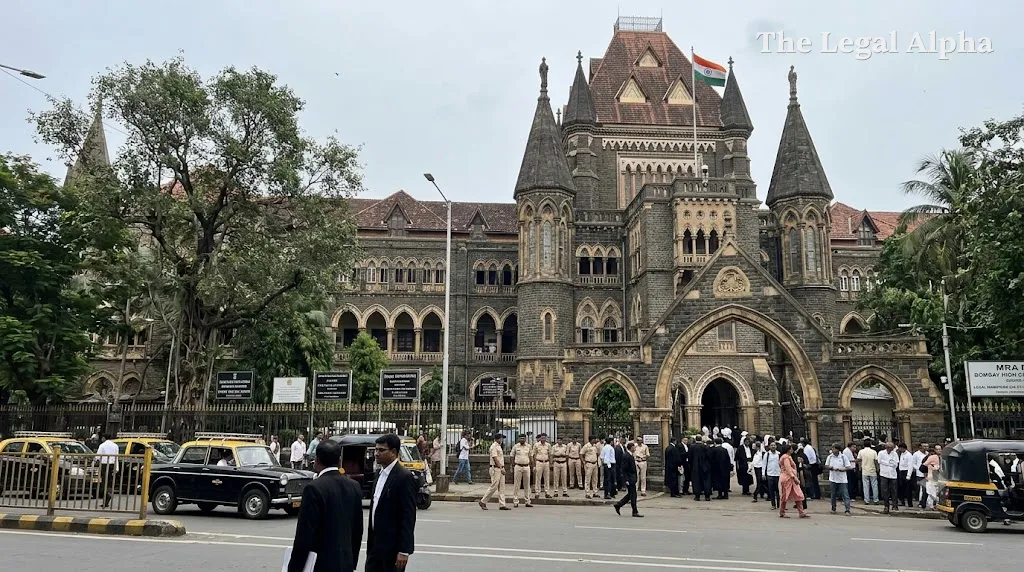
The Bombay High Court has called upon the Maharashtra state government to file a formal response addressing allegations that Mumbai Police arbitrarily and unlawfully rounded up peaceful demonstrators and bystanders during demonstrations organized against the Chief Election Commissioner (CEC) on October 10 and 11, 2026.
A Division Bench comprising Chief Justice Mahesh Chandra Tripathi and Justice Advait Sethna took up the writ petitions challenging wide-scale police roundups across multiple city locations. The matter gained judicial urgency following claims that hundreds of individuals, including passersby, women, and mothers accompanied by minor children, were bundled into police custody without procedural safeguards simply for exercising their fundamental right to assemble or being present near protest venues.
Legal Topic
Area of Law: Constitutional Law / Criminal Procedure
Sub-topic: Preventive Detention / Right to Peaceful Assembly and Personal Liberty
Core Legal Issue
The fundamental legal question before the High Court is whether executive police machinery can invoke preventive custody powers to arbitrarily round up, detain, or clear citizens and bystanders during public demonstrations without demonstrating specific statutory prerequisites or complying with established procedural protections under criminal procedure and the Constitution.
The court must also determine whether state authorities violated constitutional guarantees by reviving scrutiny or effecting detentions based on prior FIRs that have already been judicially quashed by the Supreme Court.
What Did the Court / Authority Decide?
The Division Bench directed the State of Maharashtra to place on record its formal reply detailing the facts, reasons, and statutory provisions relied upon by law enforcement during the weekend detentions.
The court explicitly noted that while maintaining law and order is a sovereign duty, the judiciary cannot permit illegal or extra-procedural detentions under the guise of policing. The Bench also instructed the petitioners to bring each specific instance and individual piece of evidence of unauthorized custody onto the judicial record, observing that sweeping assertions must be backed by documented examples before final determinations can be made. The matter remains pending for further consideration upon receipt of the State’s response.
Key Legal Points
-
Preventive detentions cannot be carried out arbitrarily or used as a standard crowd-control mechanism to curtail peaceful democratic dissent.
-
Law enforcement agencies are bound by mandatory constitutional safeguards under Articles 21 and 22, including informing detainees of grounds of detention and maintaining proper records.
-
Prior First Information Reports that have already been quashed by the Supreme Court cannot serve as lawful antecedents or pretexts for subsequent police roundups.
-
The High Court stressed that the state cannot enjoy unbridled discretion to bypass statutory detention procedure, reaffirming that judicial oversight will actively review executive restraint.
Relevant Law
-
Constitution of India: Article 19(1)(a) (Freedom of Speech and Expression), Article 19(1)(b) (Right to Assemble Peacefully), Article 21 (Protection of Life and Personal Liberty), and Article 22 (Protection against Arrest and Detention).
-
Code of Criminal Procedure, 1973 / Bharatiya Nagarik Suraksha Sanhita, 2023 (BNSS): Provisions governing preventive arrest and police detention powers.
-
Landmark Supreme Court precedent in D.K. Basu v. State of West Bengal (laying down binding procedural guidelines and accountability safeguards for arrest and detention).
Arguments of the Parties
Petitioner
The petitioner, Sagar Kantilal Devre, submitted that Mumbai Police engaged in unauthorized mass roundups, taking roughly 600 persons into custody on October 10 and around 300 more on October 11 without lawful justification. Counsel argued that the police picked up non-participating bystanders, women, and mothers with children, while also targeting individuals previously named in older protest-related cases that had already been quashed by the Supreme Court. The petitioner urged the court to mandate the preservation of all police station records and CCTV footage, demand an exhaustive official list of every person detained, and order an independent inquiry into excessive executive action.
Respondent / State
Appearing for the State of Maharashtra, government counsel sought time from the Bench to take detailed instructions and place a formal counter-affidavit on record, contending that copies of the petition had only recently been served on the government legal team.
Why Does It Matter?
This proceeding tests the boundary between legitimate preventive policing and unconstitutional suppression of civic expression. Mass roundups during demonstrations often rely on summary detention powers that escape conventional judicial scrutiny because individuals are released before formal remand hearings occur.
By demanding an itemized record and holding the state accountable to procedural standards, the High Court’s intervention protects the wider public—especially ordinary citizens and bystanders caught in public spaces—against executive overreach, reiterating that administrative convenience cannot override personal liberty.
Legal Takeaway
Preventive policing is not an untamed executive prerogative and cannot be deployed to extinguish the right to peaceful assembly. Law enforcement must scrupulously adhere to statutory safeguards and human rights guidelines when restraining any citizen, as the courts will intervene against arbitrary detentions regardless of how short their duration may be.
Sources
Primary Source:
Judicial proceedings and orders before the Division Bench of Chief Justice Mahesh Chandra Tripathi and Justice Advait Sethna, High Court of Judicature at Bombay (Writ Petition concerning Mumbai Police Detentions during October 2026 Demonstrations).
Additional Sources:
High Court reporting records; Public Interest Litigation filings by Sagar Kantilal Devre (October 2026).